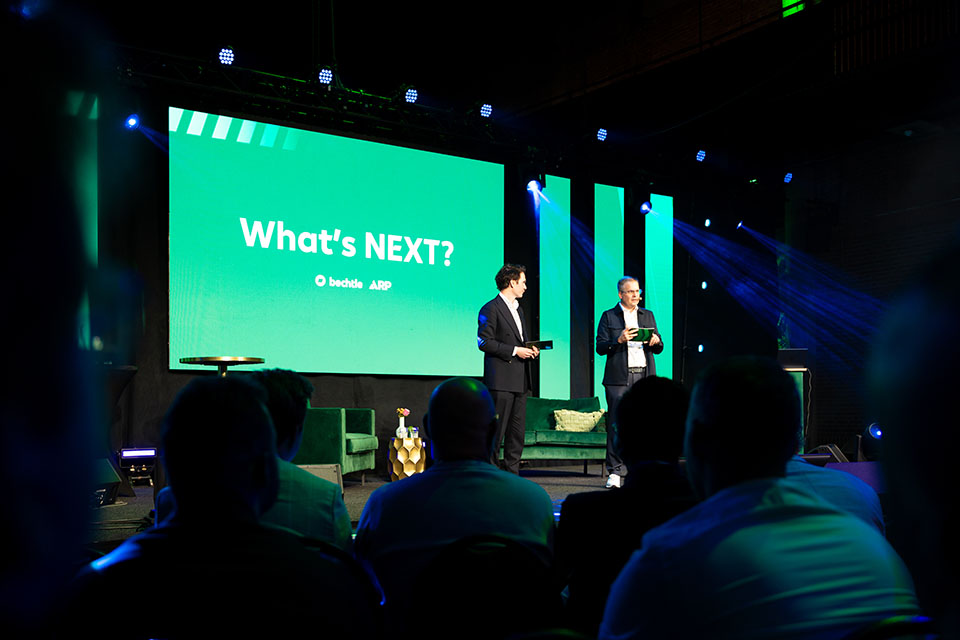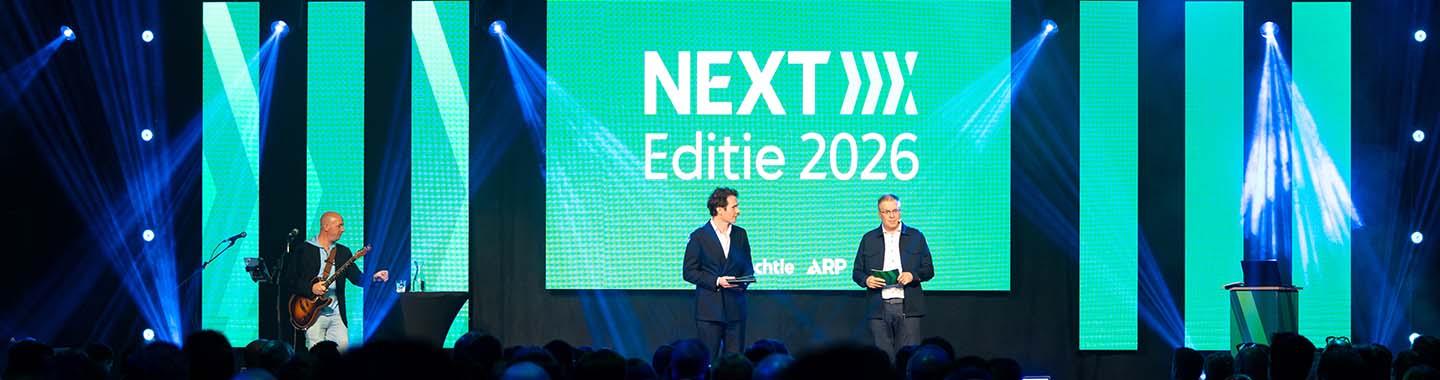
A look back at NEXT 2026: IT on the move.
- How can an organisation keep moving forward whilst technology, geopolitics and business expectations continue to change?
- How do you determine which technological trends are relevant to your organisation and where you want to retain control?
- What does change require not only of your technology, but also of your organisation and the people who work with it?
Watch the recap video.
We use YouTube to embed video content on our website. This service may collect data on your activity. For more information, please go to the settings page.
Key takeaways at a glance.

Change starts with the things you can influence.
Change brings uncertainty. Mark Tuitert showed that, whilst you cannot control every development, you can decide for yourself how to deal with them. The same applies to organisations. Moving forward requires people who dare to make choices under pressure, who work together to choose the same direction, and who know what they can influence.

Digital sovereignty starts with understanding, not simply switching over.
Wanting to be less dependent does not mean you have to cut ties with suppliers or technology straight away. First, identify what you are dependent on, which processes are critical to your organisation, and where you specifically want greater freedom of choice or control. Only then can you determine what action is required.

IT should be at the table when the course is being set.
Security, AI, business continuity and digital dependencies have long since ceased to be merely technical issues. They affect the entire organisation. This calls for an IT department that is not simply brought in when a solution needs to be chosen, but is involved in the discussions leading up to those decisions.

Not every movement calls for immediate action.
New technology offers opportunities, but speed does not automatically equate to progress. It is precisely when developments follow one another in rapid succession that it helps to first get a clear picture of the problem. What do you want to achieve, what does your organisation need, and when is the right time to take action?
A look back at the sessions.
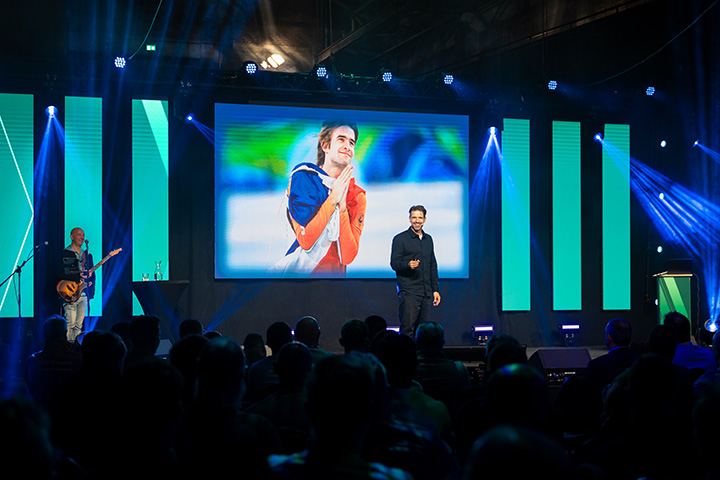
Session: Mark Tuitert: the mindset to keep moving.
Olympic champion, entrepreneur and bestselling author Mark Tuitert kicked off the main programme with a talk on drive, performance and coping with pressure. Drawing on Stoic philosophy and lessons from his speed-skating career, he demonstrated what it takes to pursue ambitious goals, remain resilient under pressure and move in the same direction as a team.
An important lesson Mark shared was that whilst you cannot control everything that happens around you, you can control how you deal with it. Working harder isn’t always the solution. Sometimes it actually helps to consciously take a step back, reflect and reassess what is needed. And you never make progress entirely on your own. Even as an individual top-level athlete (or, in this case, a team member), you need a team. This message is just as relevant for organisations that have to constantly adapt to change.
Session: Kees Verhoeven: strategic choices in a digital world.
During NEXT, Kees Verhoeven looked beyond today’s technological trends. Technology has become increasingly intertwined with the economy, geopolitics and power. In this regard, Europe is heavily dependent on technology and infrastructure from, amongst others, the United States and China. According to Kees, digital sovereignty does not mean you have to do everything yourself, but that you know what you are dependent on and consciously decide where you want to retain freedom of choice and control.
To achieve this, he argues, we must also pay greater attention to the ‘I’ for information in ‘IT’. What information do you have, how do you organise it, and who controls it? As a result, digital autonomy has long ceased to be an issue for the IT department alone. Executives and technologists must learn to understand each other better, so that technical complexity can be translated into strategic choices for the organisation.
Would you like to read more on this topic? Read the blog ‘Digital sovereignty starts with insight, not with a hasty switch’.
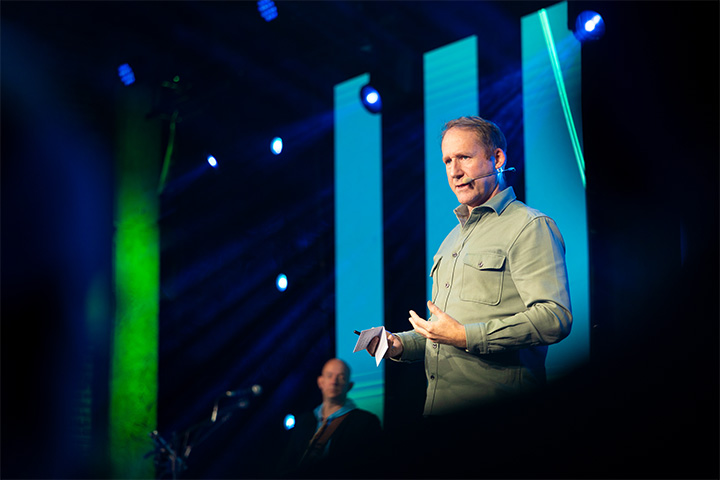
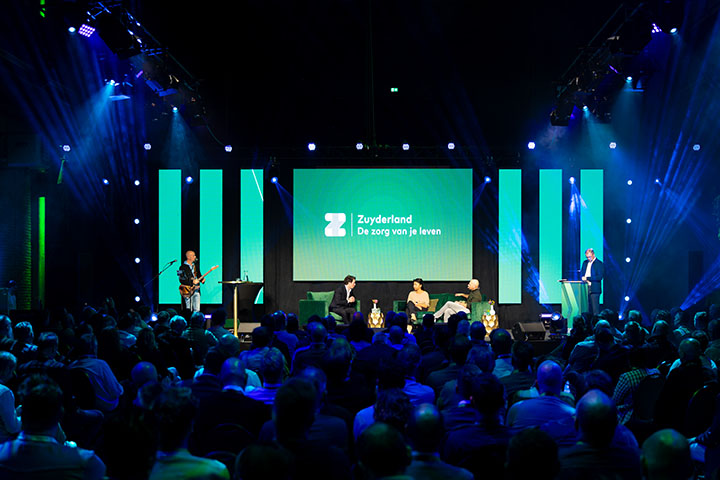
Session: IT under pressure: lessons from real-world experience.
Following the discussions on mindset and digital sovereignty, the focus shifted to day-to-day IT practice. Irene To from Zuyderland and Jürgen Slaats from Shimano shared how they tackle issues relating to security, digitalisation, organisational culture and a changing supplier landscape. Although their organisations differ greatly from one another, recognisable challenges emerged: how do you keep IT manageable, how do you make sound decisions, and how do you ensure that IT has a seat at the table when the course is being set?
The role of the IT partner was also discussed at length. A poll of visitors showed just how important this partnership is: 57.3 per cent expect, above all, a high level of partnership, quality and strategic advice. A further 31.5 per cent prefer a comprehensive IT partner who takes as much off their hands as possible. At Zuyderland, you can see in practice what such a collaboration can achieve. When replacing over 500 iPads, Zuyderland, ARP and other partners involved worked closely together to carefully prepare the roll-out and minimise the impact on patients and healthcare staff.
Would you like to know how Zuyderland went about this and what role ARP played? Click the button below to find out.
Session: Ben van der Burg: technology as an opportunity to remain relevant.
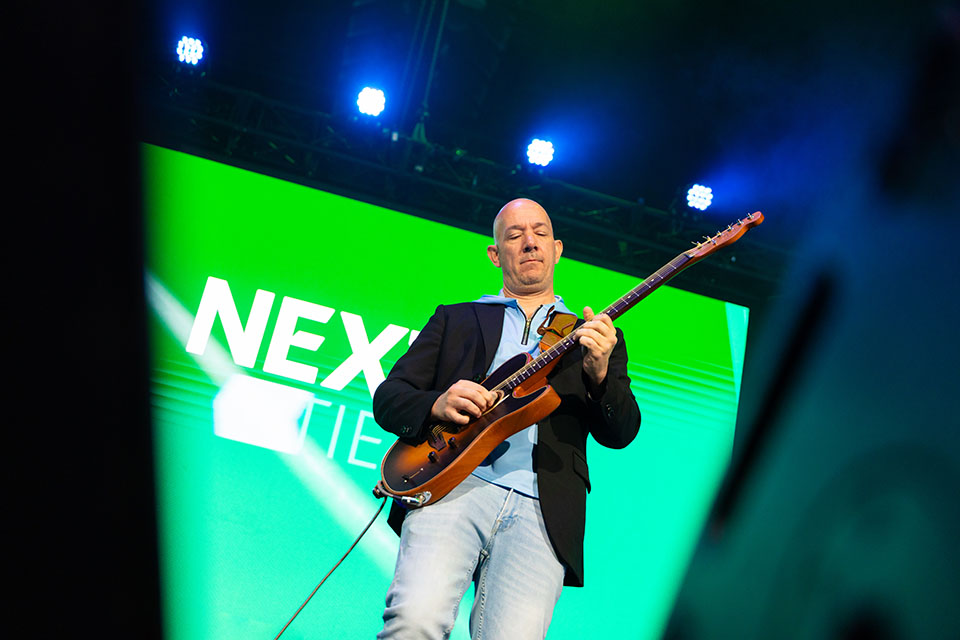
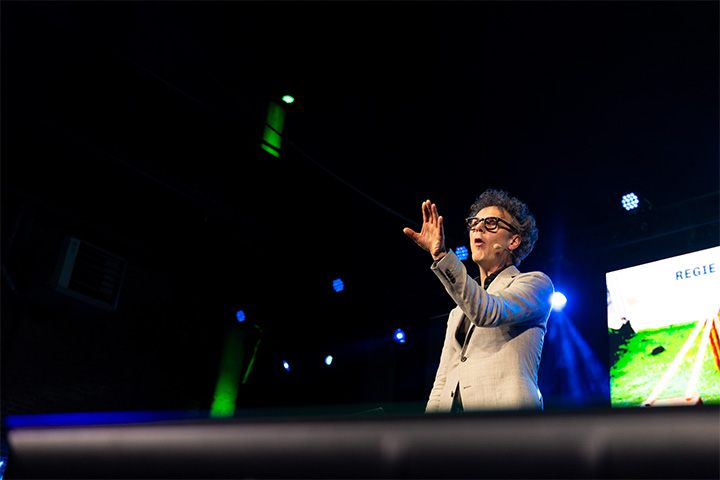
Ben van der Burg rounded off the main programme in a way that only Ben can: energetically, with his own unique flair and at a brisk pace. His keynote speech on technology as an opportunity to remain relevant was a whirlwind of developments, observations and humour – and thus a finale we are unlikely to forget in a hurry.
His talk tied in with the central theme of NEXT: technology continues to evolve, and organisations will need to keep adapting to it. Not by blindly following every development, but by remaining curious about what technology makes possible and which of those opportunities are relevant to your own organisation.

Everything taken care of: from the initial contact to the final data wipe.
After NEXT, are you curious to find out how ARP manages your IT more effectively? We’d be happy to work with you to find solutions. Because a good workplace isn’t just a one-off IT project; it’s an ongoing process. The ARP Services Hub is your partner throughout the entire IT lifecycle. Not as a supplier who simply delivers a box, but as a partner who understands what’s going on within your organisation. At every stage.
Connection in the Connect Centre.
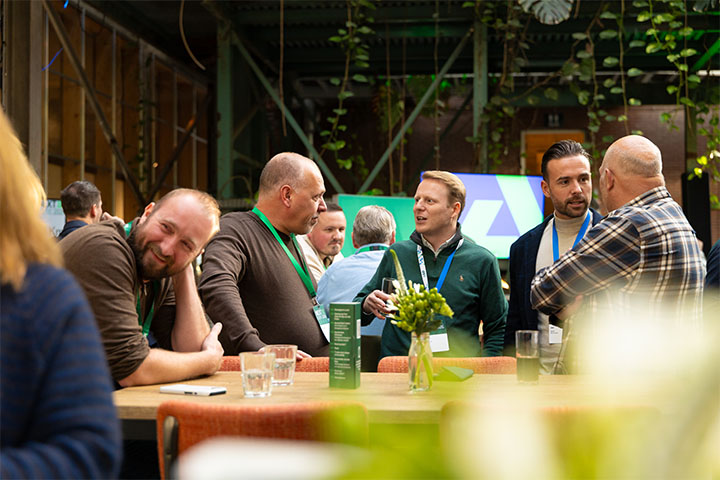
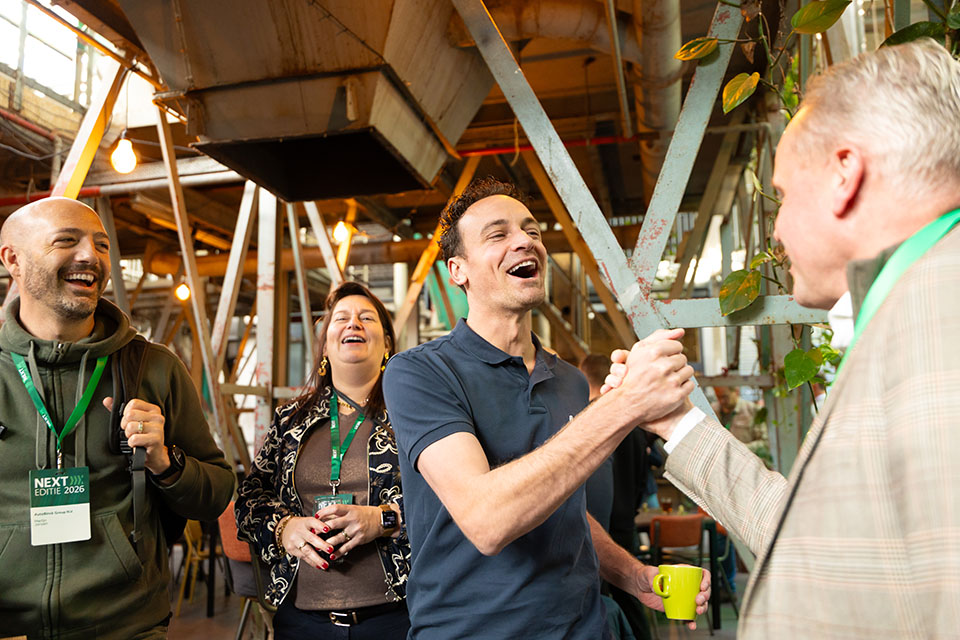
NEXT wasn’t just about what happened on stage. In the Connect Centre, visitors came together with experts from Bechtle, ARP, PQR, Cadmes and GITA (Global IT Alliance) during lunch and the networking drinks reception. It was a place to discuss the insights from the sessions in more detail, make new contacts and get to know the various areas of expertise within the Bechtle Group.
At NEXT, you also had the chance to discover our new branding. With our refreshed look, we are highlighting our core values even more clearly and aligning more closely with the Bechtle Group visually. In this way, we are also demonstrating what ARP stands for: the personalised support and flexibility of a local IT partner, combined with the strength and stability of an international organisation with over 15,500 employees across 14 European countries.